
Preloader

Knee Arthritis

Knee Arthritis_Banner

Arthritis means inflammation of a joint and commonly affects the knee, the largest weight-bearing joint in the body. Knee arthritis can cause pain, swelling, stiffness, and difficulty with walking, climbing stairs, or daily activities.

Although arthritis cannot be completely cured, modern treatments can effectively control pain, improve movement, and maintain an active lifestyle.

Knee Anatomy – Why Arthritis Causes Pain

The knee joint is formed by:

  • Femur (thigh bone)
  • Tibia (shin bone)
  • Patella (kneecap)

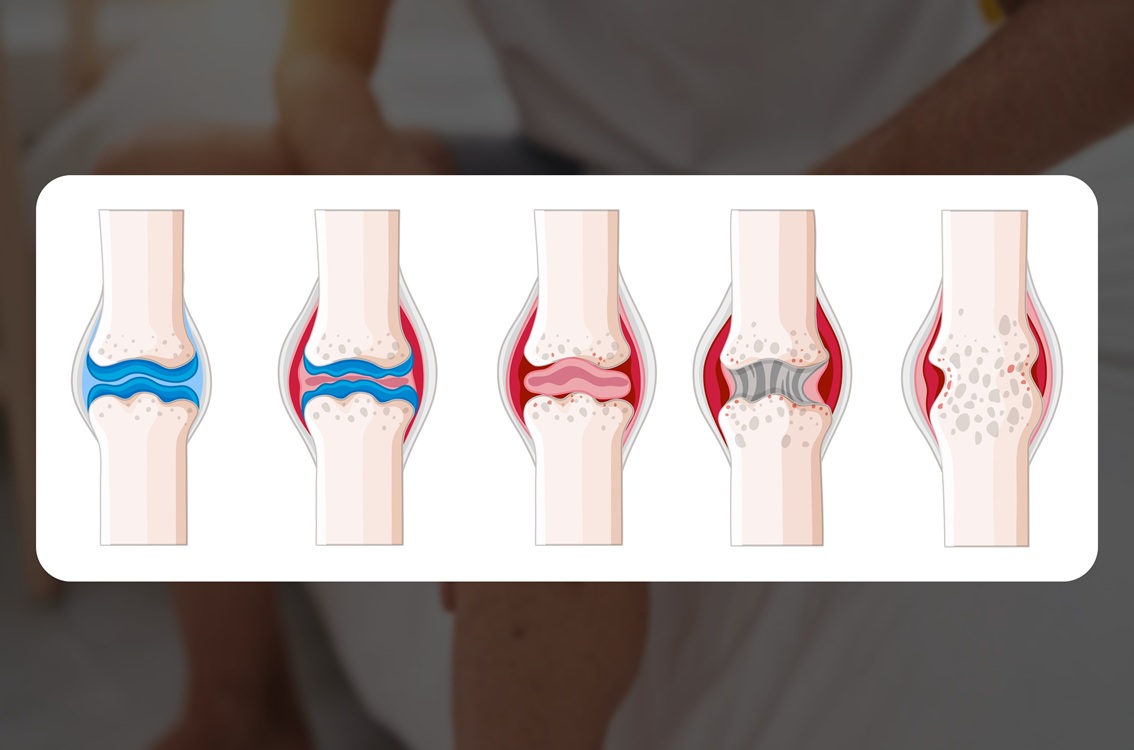
The bone ends are covered by articular cartilage, which allows smooth movement. Two menisci act as shock absorbers and help stabilize the joint. A thin lining (synovium) produces fluid to reduce friction.

In arthritis, cartilage wears out, leading to pain, stiffness, and bone-on-bone contact.

Types of Knee Arthritis

Osteoarthritis (Most Common)

  • Age-related “wear and tear” arthritis
  • Gradual cartilage loss
  • Pain worsens over time
  • Common after 50 years, but can occur earlier

Rheumatoid Arthritis

  • Autoimmune disease
  • Often affects both knees
  • Causes joint swelling, pain, and stiffness

Post-Traumatic Arthritis

  • Develops years after knee injury
  • Can follow fractures, ligament injuries, or meniscus tears

Symptoms of Knee Arthritis

  • Knee pain that worsens with activity
  • Morning stiffness or stiffness after rest
  • Swelling and warmth
  • Grinding or cracking sensation (crepitus)
  • Knee giving way or weakness
  • Difficulty walking, squatting, or climbing stairs
  • Pain may worsen with weather changes

Doctor Evaluation & Diagnosis

Your doctor will:

  • Assess knee movement, strength, swelling, and alignment
  • Examine walking pattern (gait)
  • Check for involvement of other joints

Investigations

  • X-rays: Show joint space narrowing and bone spurs
  • MRI / CT: Used selectively to assess cartilage or soft tissues
  • Blood tests: Helpful in diagnosing rheumatoid arthritis

Treatment of Knee Arthritis

Treatment aims to relieve pain, improve function, and delay disease progression.

Non-Surgical Treatment (First Line)

Lifestyle & Rehabilitation
  • Activity modification
  • Weight reduction to reduce joint stress
  • Physiotherapy to improve strength and flexibility
  • Low-impact exercises (cycling, swimming)
Medications
  • Pain relievers & NSAIDs (oral or topical) for pain control
  • Steroid injections for temporary relief (limited frequency)
  • DMARDs / biologics for rheumatoid arthritis (by rheumatologist)

Long-term opioid use is not recommended for knee arthritis.

Supports & Other Measures
  • Knee braces or supports
  • Heat or ice therapy
  • Walking aids when needed
  • PRP / stem cell injections: still under research, selected use only

Surgical Treatment

Surgery is considered when pain severely affects daily life and conservative treatment fails.

Surgical Options
  • Arthroscopy: Limited role; mainly for associated meniscus tears
  • Osteotomy: For early arthritis affecting one side of the knee
  • Partial knee replacement: When only one compartment is damaged
  • Total knee replacement: For advanced arthritis

Recovery After Surgery

  • Physiotherapy is essential
  • Walking usually starts early
  • Most patients experience significant pain relief and improved mobility
  • Recovery depends on procedure type and overall health

Why Choose ArthroSportz Med for Knee Arthritis Care?

At ArthroSportz Med, we offer complete knee arthritis management, from early-stage care to
advanced joint replacement.

Our Strengths

Accurate diagnosis and arthritis staging

Strong focus on non-surgical joint preservation

Advanced knee injections and rehabilitation protocols

Expertise in osteotomy, partial & total knee replacement

Individualized treatment plans

Patient-centric approach to restore mobility and independence

Our goal is not just pain relief—but helping you walk comfortably, stay active, and improve quality
of life.

Restoring strength and mobility with trusted hands for over 10 years.

12+ Years of Care

Specialising in shoulder & knee care, arthroscopy, sports injuries, and trauma.

Joint & Sports Care

Frequently Asked Question

In most cases, you can begin physiotherapy without a doctor's referral; however, some insurance providers may require one for reimbursement or coverage purposes.

In most cases, you can begin physiotherapy without a doctor's referral; however, some insurance providers may require one for reimbursement or coverage purposes.

In most cases, you can begin physiotherapy without a doctor's referral; however, some insurance providers may require one for reimbursement or coverage purposes.

In most cases, you can begin physiotherapy without a doctor's referral; however, some insurance providers may require one for reimbursement or coverage purposes.

Source/s: Banner Image Freepik (Background & Vector) & is for representational purpose only.