
Preloader

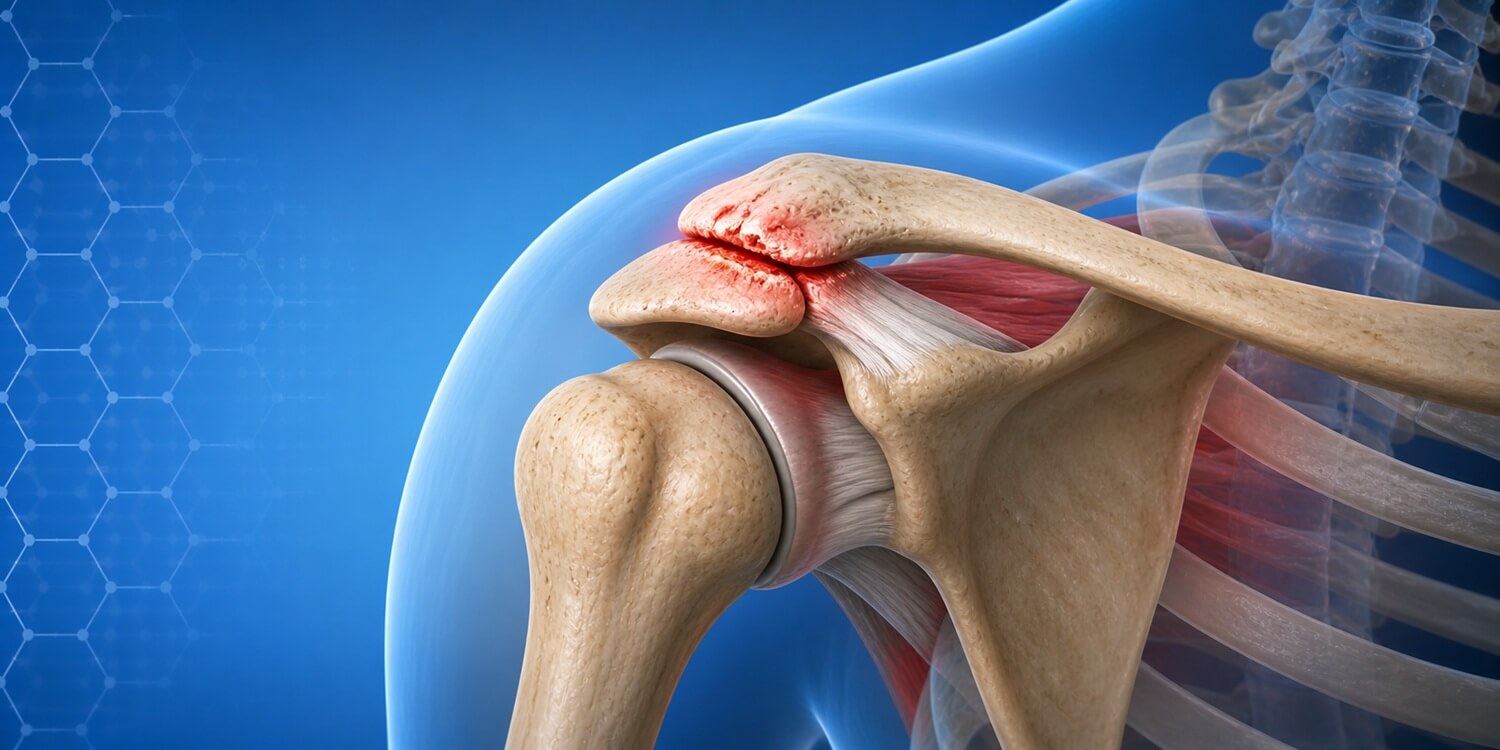
Shoulder Arthritis & AC Joint Arthritis

Shoulder Arthritis & AC Joint Arthritis_Banner

Arthritis is a common condition that affects millions of people worldwide. It simply means inflammation of a joint, which gradually leads to loss of cartilage — the smooth lining that allows joints to move freely.

When arthritis affects the shoulder, it can cause pain, stiffness, and reduced movement, making everyday activities like lifting the arm, brushing hair, reaching shelves, or dressing difficult.

Although damaged cartilage cannot be regenerated, modern treatments can effectively reduce pain, improve function, and help patients stay active.

Shoulder Anatomy – Where Arthritis Occurs

The shoulder is a ball-and-socket joint formed by:

  • Humerus (upper arm bone)
  • Scapula (shoulder blade)
  • Clavicle (collarbone)

The head of the humerus fits into a socket on the scapula called the glenoid. The rotator cuff muscles and tendons keep the joint stable and allow smooth movement.

Types of Shoulder Arthritis

Osteoarthritis (Wear-and-Tear Arthritis)

  • Caused by gradual cartilage breakdown
  • Leads to bone-on-bone contact
  • More common after age 50
  • AC joint arthritis is often seen on X-ray but may cause minimal symptoms
  • Glenohumeral arthritis usually causes significant pain and stiffness

Rheumatoid Arthritis

  • A chronic autoimmune disease
  • The immune system attacks joint lining (synovium)
  • Often affects both shoulders
  • Causes pain, swelling, stiffness, and joint damage

Post-Traumatic Arthritis

  • Develops after shoulder fractures or dislocations
  • Can affect both AC and glenohumeral joints
  • Symptoms may appear years after injury

Rotator Cuff Tear Arthropathy

  • Occurs due to a long-standing, large rotator cuff tear
  • The humeral head migrates upward and damages the joint
  • Causes severe pain, weakness, and inability to lift the arm

Avascular Necrosis (AVN)

  • Occurs when blood supply to the humeral head is reduced
  • Leads to bone collapse and secondary arthritis
  • Causes include:
    • Long-term steroid use
    • Heavy alcohol consumption
    • Sickle cell disease
    • Shoulder trauma
  • Sometimes occurs without a known cause (idiopathic)

Symptoms of Shoulder Arthritis

Pain

  • Worsens with activity and progresses over time
  • Glenohumeral arthritis: Deep ache in the shoulder, side, or back; weather-related pain
  • AC joint arthritis: Pain at the top of the shoulder
  • Rheumatoid arthritis may cause widespread shoulder pain

Other Symptoms

  • Night pain and disturbed sleep
  • Reduced range of motion
  • Difficulty lifting or reaching
  • Grinding, clicking, or snapping sounds (crepitus)
  • Weakness and stiffness

Doctor Evaluation & Diagnosis

(1) Physical Examination

Your doctor will assess:

  • Shoulder movement (active and passive)
  • Muscle strength and wasting
  • Tenderness and crepitus
  • Previous injuries or surgeries
  • Other joint involvement (suggestive of rheumatoid arthritis)

(2) Imaging Tests

  • X-rays: Show joint space narrowing, bone spurs, and bone changes
  • Diagnostic injection: Local anesthetic (with or without steroid) may be injected into the joint
    • Temporary pain relief confirms arthritis as the pain source

Treatment of Shoulder Arthritis

Treatment focuses on pain relief, improved mobility, and better quality of life.

(1) Non-Surgical Treatment

Most patients start with conservative care:

  • Activity modification
  • Physiotherapy to improve motion and strength
  • NSAIDs for pain and inflammation (used cautiously)
  • Corticosteroid injections for temporary pain relief
  • Heat or ice therapy
  • Disease-modifying drugs for rheumatoid arthritis (prescribed by a rheumatologist)

Joint lubricants used for knee arthritis are not recommended for shoulder arthritis.

(2) Surgical Treatment

Surgery is considered when:

  • Pain significantly limits daily activities
  • Non-surgical treatment fails

(3) Arthroscopy (Early Arthritis)

  • Minimally invasive keyhole procedure
  • Removes loose cartilage, inflammation, and bone spurs
  • Provides temporary relief
  • Not recommended for advanced arthritis

(4) Shoulder Joint Replacement (Arthroplasty)

Used for advanced glenohumeral arthritis. Types of Shoulder Replacement:

  • Hemiarthroplasty: Replacement of humeral head only
  • Total shoulder replacement: Both humeral head and glenoid replaced
  • Reverse shoulder replacement:
    • Best for rotator cuff tear arthropathy
    • Relies on the deltoid muscle instead of rotator cuff

(5) AC Joint Arthritis Surgery

  • Distal clavicle excision
  • Removes a small portion of the collarbone
  • Performed arthroscopically or open
  • Scar tissue fills the space and relieves pain

Recovery & Outcomes

  • Most patients experience significant pain relief and improved function
  • Rehabilitation depends on the procedure performed
  • Recovery influenced by:
    • Diabetes, blood pressure
    • Smoking
    • Mental health
  • Pain is managed carefully with a combination of medications
  • Opioids are used only briefly and cautiously

Possible Complications

  • Infection
  • Bleeding
  • Blood clots
  • Nerve or blood vessel injury (Overall risk is low and discussed before surgery)

Why Choose ArthroSportz Med for for Shoulder Arthritis Treatment in Chennai?

At ArthroSportz Med, we provide comprehensive, personalized care for all stages of shoulder arthritis, from early management to advanced joint replacement.

Our strengths:

Accurate identification of arthritis type and joint involved

Strong emphasis on non-surgical pain management

Expertise in shoulder arthroscopy and joint preservation

Advanced shoulder replacement & reverse shoulder replacement

Special focus on rotator cuff arthropathy

Individualized rehabilitation and recovery plans

Patient-centric approach to restore mobility and quality of life

Our goal is not just to reduce pain—but to help you regain confidence, independence, and comfortable shoulder movement.

Restoring strength and mobility with trusted hands for over 12 years.

12+ Years of Care

Specialising in shoulder & knee care, arthroscopy, sports injuries, and trauma.

Joint & Sports Care

Frequently Asked Question

In most cases, you can begin physiotherapy without a doctor's referral; however, some insurance providers may require one for reimbursement or coverage purposes.

In most cases, you can begin physiotherapy without a doctor's referral; however, some insurance providers may require one for reimbursement or coverage purposes.

In most cases, you can begin physiotherapy without a doctor's referral; however, some insurance providers may require one for reimbursement or coverage purposes.

In most cases, you can begin physiotherapy without a doctor's referral; however, some insurance providers may require one for reimbursement or coverage purposes.

Source/s: Banner Image – AI Generated & is for representational purpose only.