
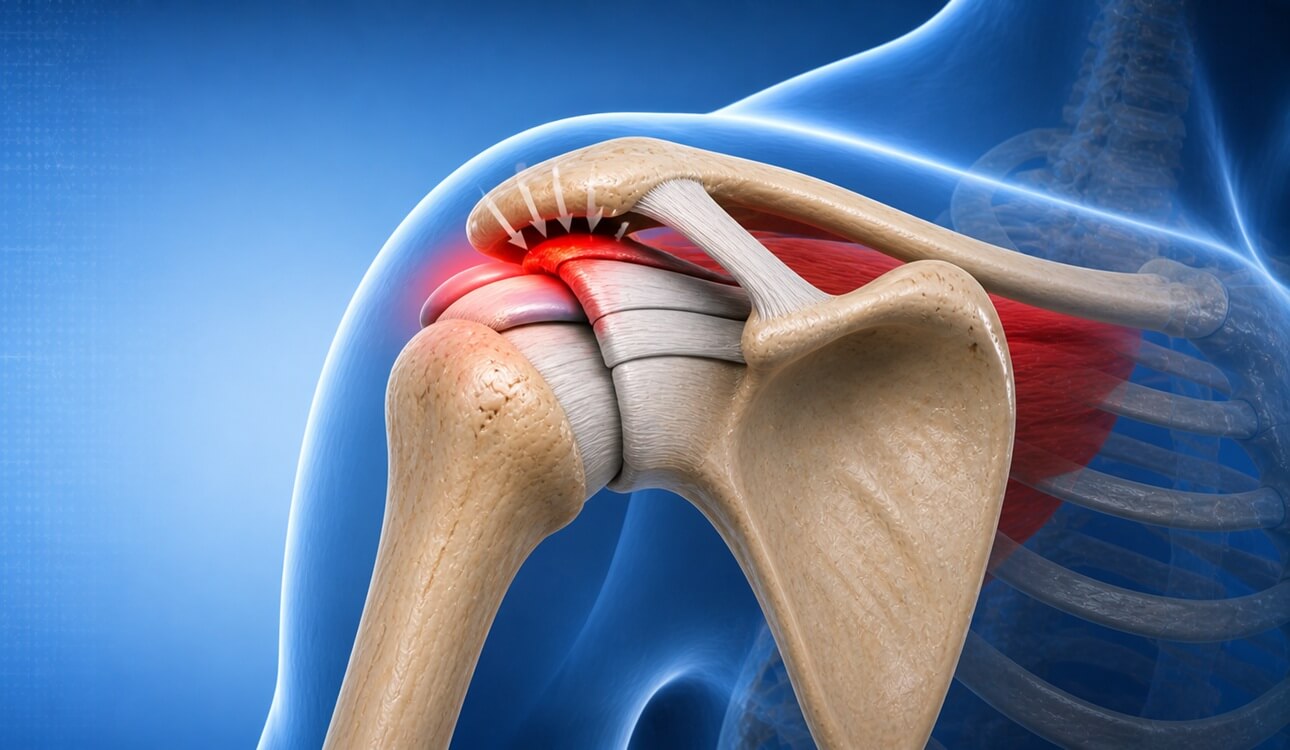
Shoulder pain is one of the most common musculoskeletal complaints and can affect people of all ages. A frequent cause of this pain is rotator cuff tendinitis and shoulder impingement, conditions involving irritation of the tendons and soft tissues around the shoulder joint.
The rotator cuff muscles and tendons play a key role in lifting and rotating the arm. When these structures become inflamed or compressed, shoulder movements can become painful and restricted.
The shoulder is a highly mobile joint made up of:
The rotator cuff tendons attach to the top of the humerus and help stabilize and move the shoulder.
Between the rotator cuff and the bony roof of the shoulder (the acromion) lies a fluid-filled sac called the bursa, which allows smooth movement during arm elevation.
Rotator cuff–related shoulder pain can occur due to:
When you raise your arm, the acromion may rub against the rotator cuff and bursa, causing pain, irritation, and inflammation.
Shoulder impingement and rotator cuff tendinitis are common in:
In some cases, pain may begin suddenly, and shoulder movement may become severely limited.
Your doctor will:
The aim of treatment is to reduce pain, restore movement, and improve shoulder function. Treatment is tailored based on age, activity level, and severity of symptoms.
Most patients improve with conservative (non-surgical) care:
Recovery may take several weeks to months, but most patients return to normal activities without surgery.
Surgery is considered when:
The goal is to create more space for the rotator cuff tendons by:
During surgery, other associated problems may also be treated, such as:
At ArthroSportz Med, we provide specialized, evidence-based care for shoulder pain, focusing on accurate diagnosis, effective treatment, and long-term recovery.
Our strengths:
Our goal is not just to relieve pain—but to restore smooth, strong, and pain-free shoulder movement, helping you return confidently to work, sports, and daily life.

12+ Years of Care
Joint & Sports Care
In most cases, you can begin physiotherapy without a doctor's referral; however, some insurance providers may require one for reimbursement or coverage purposes.
In most cases, you can begin physiotherapy without a doctor's referral; however, some insurance providers may require one for reimbursement or coverage purposes.
In most cases, you can begin physiotherapy without a doctor's referral; however, some insurance providers may require one for reimbursement or coverage purposes.
In most cases, you can begin physiotherapy without a doctor's referral; however, some insurance providers may require one for reimbursement or coverage purposes.
Source/s: Banner Image – AI Generated & is for representational purpose only.
Copyright © 2026 All Rights Reserved. Designed by Twitchtime.