
Preloader

Biceps Tendinitis

Biceps Tendinitis_Banner

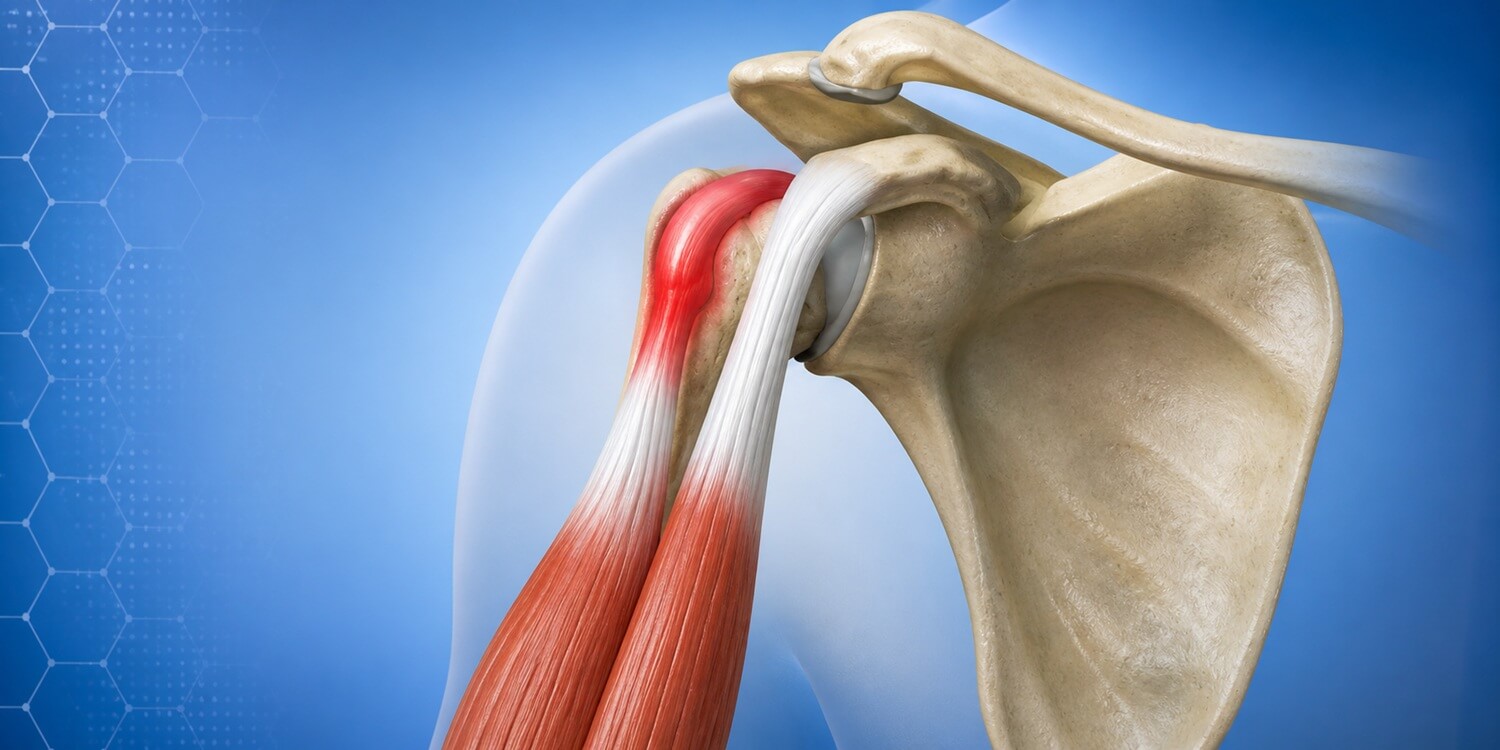
Biceps tendinitis is inflammation or irritation of the long head of the biceps tendon, which runs from the biceps muscle in the upper arm into the shoulder joint. This tendon plays an important role in shoulder stability and movement.

Patients commonly experience pain in the front of the shoulder, especially during lifting or overhead activities. In many cases, symptoms improve with rest, medication, and physiotherapy. However, persistent or severe cases may require surgery.

Shoulder Anatomy – Understanding the Biceps Tendon

The shoulder is a ball-and-socket joint made up of:

  • Humerus (upper arm bone)
  • Scapula (shoulder blade)
  • Clavicle (collarbone)

Key Structures Involved

  • Glenoid: The socket part of the shoulder joint, lined with cartilage
  • Rotator cuff: A group of muscles and tendons that stabilize and move the shoulder
  • Biceps tendon:
    • Long head: Attaches to the top of the glenoid (inside the shoulder joint)
    • Short head: Attaches to the coracoid process (front of the shoulder blade)

Biceps tendinitis specifically affects the long head of the biceps tendon.

What Happens in Biceps Tendinitis?

  • Early stage: The tendon becomes inflamed and swollen
  • Progressive stage: The tendon thickens due to continued irritation
  • Advanced stage: The tendon may fray or tear
  • Complete tear: Can cause a visible bulge in the arm called a “Popeye deformity”

Associated Shoulder Conditions

Biceps tendinitis often occurs along with other shoulder problems, such as:

  • Rotator cuff degeneration or tears
  • Shoulder arthritis
  • Labral tears (SLAP lesions)
  • Chronic shoulder instability or repeated dislocations
  • Inflammatory conditions of the shoulder joint lining

Causes & Risk Factors of Biceps Tendinitis

  • Pain or tenderness in the front of the shoulder
  • Pain worsening with overhead lifting or activity
  • Pain while reaching behind the back (e.g., fastening a seatbelt or wearing a coat)
  • Aching pain radiating down the upper arm
  • Occasional clicking or snapping sensation in the shoulder
  • Shoulder weakness

Doctor Evaluation & Diagnosis

(1) Physical Examination

Your doctor will:

  • Assess shoulder movement, strength, and stability
  • Palpate the front of the shoulder over the biceps tendon
  • Look for signs of associated shoulder injuries

(2) Imaging Tests

  • X-rays: Rule out bone-related problems
  • MRI or Ultrasound:
    • Assess tendon inflammation
    • Detect partial or complete tears
    • Identify associated rotator cuff or labral injuries

Treatment Options for Biceps Tendinitis

Your orthopaedic surgeon will treat biceps tendinitis and any associated shoulder conditions
together for the best outcome.

(1) Non-Surgical Treatment

Most patients improve with conservative treatment, which is highly effective.

  • Rest & activity modification
  • Ice therapy to reduce swelling
  • Pain medications (NSAIDs)
  • Steroid injections
    • Reduce inflammation and pain
    • Often performed under ultrasound guidance
  • Physical therapy
    • Stretching to improve flexibility
    • Strengthening exercises for shoulder stability

(2) Surgical Treatment

Surgery is considered when:

  • Symptoms persist despite adequate non-surgical treatment
  • Pain keeps recurring
  • There are associated shoulder injuries

Surgery is usually performed using arthroscopy (keyhole surgery).

Surgical Option 1: Biceps Repair (Rare)

  • Reattachment of the tendon to the glenoid
  • Reserved for young, high-demand patients

Surgical Option 2: Biceps Tenodesis

  • The damaged portion of the tendon is removed
  • Remaining tendon is reattached to the humerus
  • Preserves strength and appearance
  • Commonly performed in active individuals

Surgical Option 3: Biceps Tenotomy

  • The damaged tendon is released
  • Least invasive option
  • Faster recovery
  • May cause a Popeye bulge, but function is usually good

Recovery & Rehabilitation

  • Sling support for a few weeks (if required)
  • Gradual return to movement and strengthening
  • Physiotherapy may be prescribed based on the procedure
  • Most patients regain full, pain-free shoulder movement
  • High-demand overhead athletes may need activity modification

Why Choose ArthroSportz Med for Biceps Tendinitis Treatment in Chennai?

At ArthroSportz Med, we offer comprehensive shoulder care, combining accurate diagnosis, advanced arthroscopic techniques, and personalized rehabilitation.

Our advantages:

Expertise in shoulder arthroscopy and sports-related shoulder injuries

Accurate identification of associated rotator cuff and labral problems

Image-guided injections for precise pain relief

Advanced biceps tenodesis and tenotomy techniques

Minimally invasive surgery for faster recovery

Individualized rehabilitation protocols

Strong focus on restoring strength, function, and long-term shoulder health

Our goal is not just to relieve pain—but to restore confident, pain-free shoulder movement and help you return to work, sports, and daily life safely.

Restoring strength and mobility with trusted hands for over 12 years.

12+ Years of Care

Specialising in shoulder & knee care, arthroscopy, sports injuries, and trauma.

Joint & Sports Care

Frequently Asked Question

In most cases, you can begin physiotherapy without a doctor's referral; however, some insurance providers may require one for reimbursement or coverage purposes.

In most cases, you can begin physiotherapy without a doctor's referral; however, some insurance providers may require one for reimbursement or coverage purposes.

In most cases, you can begin physiotherapy without a doctor's referral; however, some insurance providers may require one for reimbursement or coverage purposes.

In most cases, you can begin physiotherapy without a doctor's referral; however, some insurance providers may require one for reimbursement or coverage purposes.

Source/s: Banner Image – AI Generated & is for representational purpose only.