
Preloader

Dislocated Kneecap (Patellar Dislocation)

Patellar Dislocation_Banner

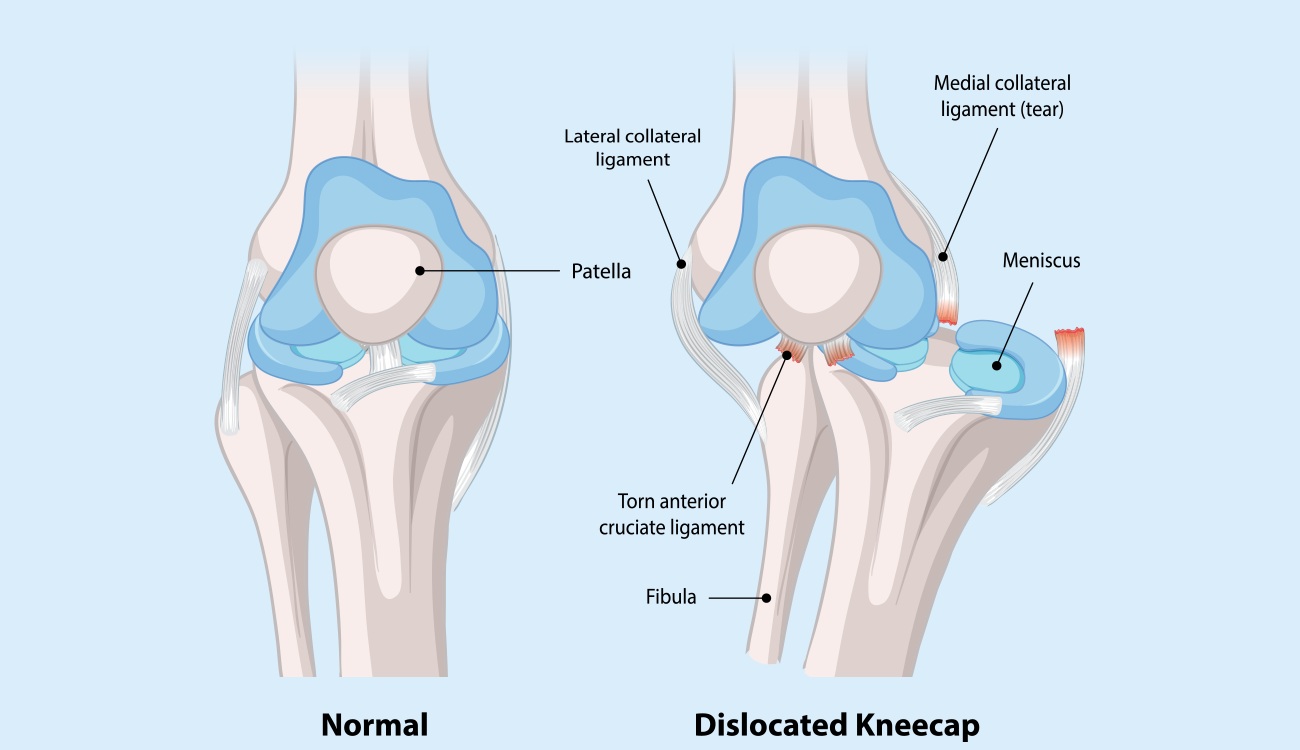
When everything is working normally, the kneecap (patella) moves smoothly up and down within a groove at the end of the thighbone called the trochlea. This smooth movement allows you to walk, run, sit, squat, and climb stairs comfortably.

When the kneecap slips out of this groove, it can cause pain, swelling, and instability. If this happens repeatedly, the condition is called recurrent patellar instability.

Knee Anatomy – Why the Kneecap Slips

The patella sits at the front of the knee and connects the thigh muscles (quadriceps) to the shinbone (tibia). As the knee bends and straightens, the kneecap glides within the trochlear groove.

Several structures keep the patella aligned:

  • Medial Patellofemoral Ligament (MPFL) – prevents sideways movement
  • Quadriceps muscles
  • Shape of the trochlear groove
  • Overall limb alignment and bone rotation

Factors That Increase Patellar Instability

  • Injury or tear of the MPFL
  • A shallow or flat trochlear groove
  • Knock-knee alignment
  • Abnormal rotation of the femur or tibia
  • Patellar tendon attachment too far to the outside of the shinbone

These factors can cause the kneecap to slide or dislocate laterally (outwards).

Causes of Kneecap Dislocation

  • Sudden twisting or pivoting injury
  • Awkward fall
  • Non-contact sports injuries
  • Direct blow to the kneecap

Symptoms of Kneecap Dislocation

  • Feeling that the kneecap may “slip out” (apprehension)
  • Repeated kneecap dislocations
  • Pain in the front of the knee
  • Swelling after dislocation
  • Damage to cartilage behind the kneecap

Doctor Evaluation & Diagnosis

Physical Examination

Your doctor may:

  • Observe your walking pattern
  • Check kneecap movement during knee bending
  • Assess muscle strength and alignment
  • Look for tenderness and instability

Imaging Tests

  • X-rays – assess bone alignment
  • MRI – evaluate MPFL injury, cartilage damage
  • CT scan – assess rotational alignment and tracking problems

Treatment Options for Patellar Dislocation

Immediate Care

If the kneecap is dislocated, it is first reduced (gently guided back into position). Sometimes this happens on its own; other times a doctor assists.

Non-Surgical Treatment

Recommended for first-time dislocations:

  • Physiotherapy to strengthen thigh muscles
  • Activity modification
  • Cycling-based rehabilitation
  • Patellar stabilizing brace

👉 Most patients return to normal activity within 1–3 months.

Surgical Treatment

Surgery may be recommended for:

  • Recurrent dislocations
  • High-risk first-time dislocations
  • Severe maltracking
  • Associated cartilage damage

Surgical options may include:

  • MPFL reconstruction
  • Realignment of the patellar tendon
  • Correction of bone alignment
  • Trochlear groove reshaping (selected cases)

These procedures aim to restore stability and prevent further cartilage damage.

Outcomes

  • First-time dislocations treated conservatively often do well
  • Surgery for recurrent instability has excellent outcomes
  • Re-dislocation rates after surgery are less than 10%

Why Choose ArthroSportz Med for Patellar Instability?

At ArthroSportz Med, we specialize in knee stability disorders and sports-related knee injuries, offering personalized and evidence-based care.

Our Strengths:

Expertise in patellar instability and MPFL reconstruction

Detailed alignment and tracking assessment

Arthroscopic and minimally invasive techniques

Focus on non-surgical care whenever appropriate

Sports-specific rehabilitation programs

Emphasis on long-term knee health and prevention of recurrence

Our goal is not just to put the kneecap back in place—but to keep it stable for the long term, so you can move confidently and pain-free.

Restoring strength and mobility with trusted hands for over 10 years.

12+ Years of Care

Specialising in shoulder & knee care, arthroscopy, sports injuries, and trauma.

Joint & Sports Care

Frequently Asked Question

In most cases, you can begin physiotherapy without a doctor's referral; however, some insurance providers may require one for reimbursement or coverage purposes.

In most cases, you can begin physiotherapy without a doctor's referral; however, some insurance providers may require one for reimbursement or coverage purposes.

In most cases, you can begin physiotherapy without a doctor's referral; however, some insurance providers may require one for reimbursement or coverage purposes.

In most cases, you can begin physiotherapy without a doctor's referral; however, some insurance providers may require one for reimbursement or coverage purposes.

Source/s: Banner Image – AI Generated & is for representational purpose only.