
Preloader

Patellofemoral Pain Syndrome (PFPS)

Patellfemoral pain syndrome & chondromalaia patellae_banner

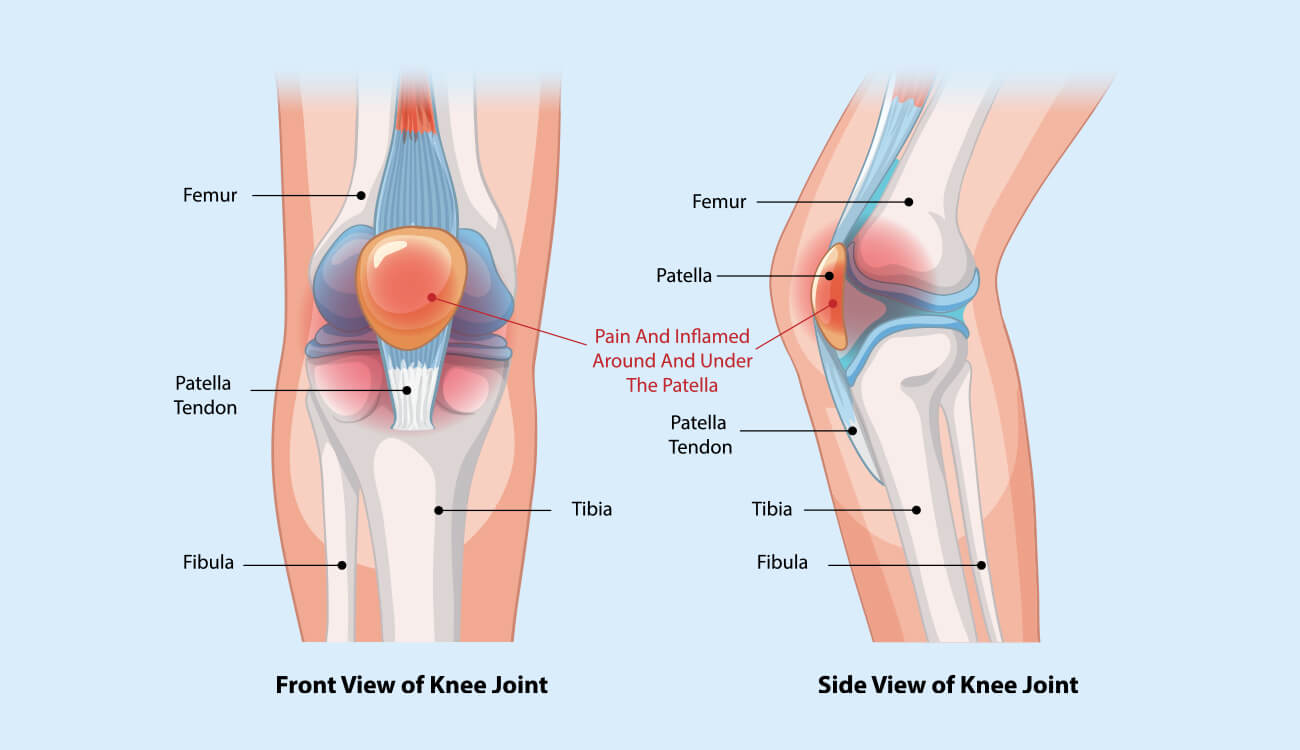
Patellofemoral Pain Syndrome (PFPS) is a common cause of pain in the front of the knee, around or behind the kneecap. It is often called runner’s knee, but it can affect anyone—including nonathletes.

PFPS is commonly seen in young adults and females, and it can make everyday activities like climbing stairs, squatting, kneeling, running, or sitting for long periods uncomfortable.

What Is Chondromalacia Patella?

Chondromalacia patella means softening and damage of the cartilage on the underside of the kneecap.

  • The cartilage normally allows the kneecap to glide smoothly
  • With repeated stress or poor alignment, this cartilage becomes soft, rough, or worn
  • Cartilage itself has no nerves, so it does not directly cause pain
  • Pain occurs because cartilage damage leads to inflammation of surrounding tissues and bone
    stress

👉 Chondromalacia patella is often associated with PFPS, especially in long-standing or untreated cases.

Why Do PFPS & Chondromalacia Occur?

(1) Overuse

  • Running, jumping, squatting, stair climbing
  • Sudden increase in workout intensity or duration
  • Poor training techniques

(2) Poor Kneecap Tracking

  • Kneecap not moving smoothly in its groove
  • Kneecap pulled more to one side
  • Flat or shallow groove

(3) Muscle Imbalance

  • Weak thigh (quadriceps) muscles
  • Weak hip muscles
  • Tight hamstrings or calf muscles

(4) Other Contributing Factors

  • Knock-knee alignment
  • Flat feet or improper footwear
  • Weight gain increasing knee stress

Common Symptoms of PFPS & Chondromalacia

  • Dull or aching pain in the front of the knee
  • Pain while:
    • Climbing or coming down stairs
    • Squatting or kneeling
    • Running or jumping
  • Pain after sitting for long periods with knees bent
  • Grinding, crackling, or popping sounds
  • Pain may affect one or both knees

How Is It Diagnosed?

Clinical Examination

Your doctor will:

  • Check kneecap movement (tracking)
  • Assess thigh and hip muscle strength
  • Look for tight muscles
  • Observe walking, squatting, or stair climbing

Imaging

  • X-ray: To rule out bone problems
  • MRI: Helpful if pain persists or to confirm cartilage damage (chondromalacia)

Treatment for PFPS & Chondromalacia – Mostly Non-Surgical

👉 Most patients improve without surgery.

Activity Modification

  • Reduce painful activities temporarily
  • Switch to low-impact exercises (cycling, swimming)
  • Avoid deep squats and excessive stairs initially

Physiotherapy (Key Treatment)

  • Strengthening quadriceps and hip muscles
  • Stretching tight muscles
  • Improving kneecap alignment
  • Core strengthening

Supportive Measures

  • Ice packs for pain relief
  • Patellar taping or knee braces
  • Shoe inserts (orthotics) if needed
  • Short-term pain relief medication when required

Is Surgery Needed for PFPS & Chondromalacia?

Very rarely. Surgery is considered only if:

  • Pain is severe and persistent
  • Physiotherapy fails
  • Significant cartilage damage or maltracking is present

Preventing Recurrence

  • Warm up before activity
  • Stretch after exercise
  • Increase training gradually
  • Maintain strong thigh and hip muscles
  • Use proper footwear
  • Maintain healthy body weight

Why Choose ArthroSportz Med for PFPS & Chondromalacia Treatment?

At ArthroSportz Med, we specialise in front knee pain, PFPS, and chondromalacia patella, with a strong focus on non-surgical recovery.

What Patients Appreciate

Clear explanation of the condition

Accurate assessment of kneecap tracking

Personalised physiotherapy-based treatment

Avoiding unnecessary surgery

Sports- and lifestyle-specific rehab programs

Long-term pain relief and prevention

Our goal is simple: reduce pain, protect knee cartilage, and help you move confidently again.

Restoring strength and mobility with trusted hands for over 10 years.

12+ Years of Care

Specialising in shoulder & knee care, arthroscopy, sports injuries, and trauma.

Joint & Sports Care

Frequently Asked Question

In most cases, you can begin physiotherapy without a doctor's referral; however, some insurance providers may require one for reimbursement or coverage purposes.

In most cases, you can begin physiotherapy without a doctor's referral; however, some insurance providers may require one for reimbursement or coverage purposes.

In most cases, you can begin physiotherapy without a doctor's referral; however, some insurance providers may require one for reimbursement or coverage purposes.

In most cases, you can begin physiotherapy without a doctor's referral; however, some insurance providers may require one for reimbursement or coverage purposes.

Source/s: Banner Image – Freepik & is for representational purpose only.