
Preloader

Rotator Cuff Injuries

Rotator Cuff Injuries_Banner

Rotator cuff tears are a common cause of shoulder pain and difficulty in arm movements. They are frequently seen in:

  • Younger individuals following shoulder injuries or sports trauma
  • Older adults due to age-related wear and degeneration of the tendons

What Is the Rotator Cuff?

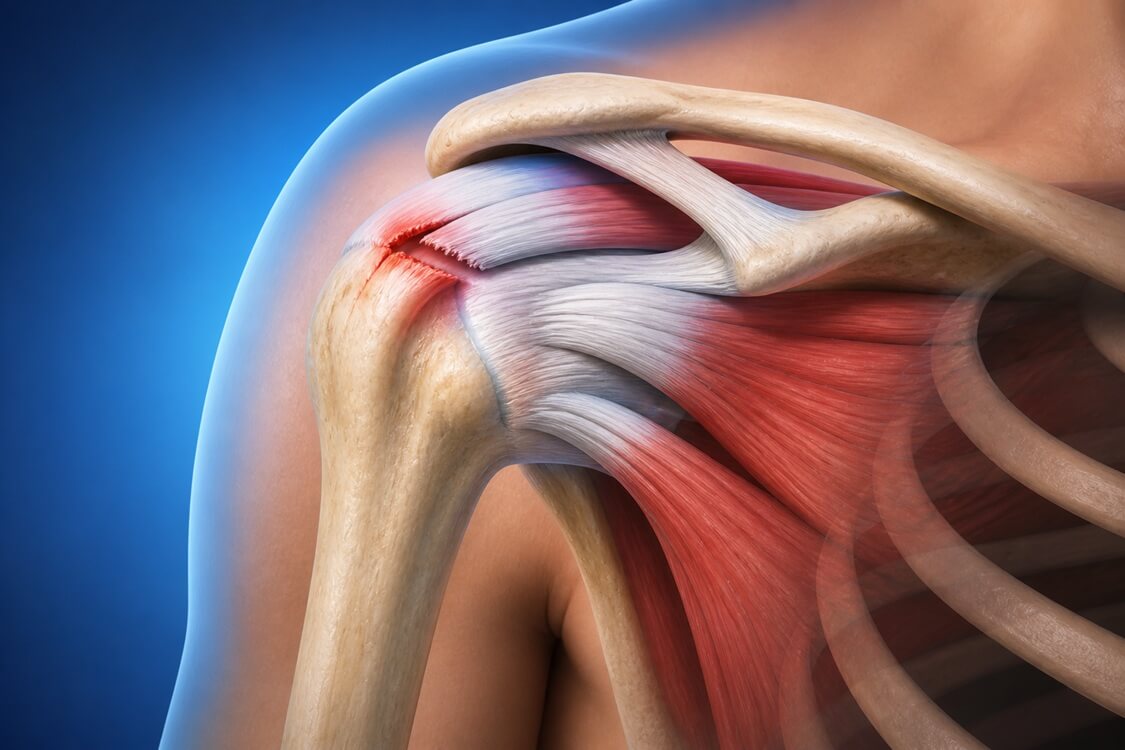
The rotator cuff is a group of four muscles and their tendons that surround the head of the upper arm bone (humerus). These tendons:

  • Stabilize the shoulder joint
  • Help lift the arm
  • Allow rotation and overhead movements

A rotator cuff tear occurs when one or more of these tendons partially or completely detach from the bone.

Causes & Risk Factors of Rotator Cuff Injuries

Rotator cuff tears can occur due to degeneration, overuse, or injury.

Common Risk Factors

  • Age-related wear and tear (more common after 40 years)
  • Repetitive overhead activities
  • Sports such as cricket, tennis, badminton, and volleyball
  • Occupations involving overhead work (painters, carpenters, electricians)
  • Traumatic injuries like falls or accidents (more common in younger patients)

Medical & Lifestyle Factors

  • Smoking (affects tendon healing)
  • Obesity and muscle weakness
  • Diabetes, hypertension
  • Inflammatory conditions like rheumatoid arthritis or lupus

Symptoms of a Rotator Cuff Tear

  • Shoulder pain at rest or during activity
  • Night pain, especially while lying on the affected side
  • Weakness when lifting or rotating the arm
  • Difficulty raising the arm overhead
  • Crackling or grinding sensation during movement

Types of Rotator Cuff Tears

Partial-Thickness Tears (Ellman Classification)

  • Grade 1: Less than 25% thickness
  • Grade 2: 25–50% thickness
  • Grade 3: More than 50% thickness

Full-Thickness (Complete) Tears (Codman Classification)

  • Small: Up to 3 cm
  • Medium: 1–3 cm
  • Large: 3–5 cm
  • Massive: More than 5 cm or involving multiple tendons

Muscle Atrophy & Tendon Retraction

Long-standing tears may lead to:

  • Muscle wasting (atrophy)
  • Retraction of the tendon away from its original attachment

These factors are important in deciding treatment options and surgical outcomes.

Why Early Treatment Matters

Untreated rotator cuff tears can lead to:

  • Chronic shoulder pain
  • Progressive weakness
  • Loss of shoulder movement
  • Enlargement of the tear over time
  • Permanent muscle damage

A partial tear can progress into a complete tear if left untreated.

Doctor Evaluation & Diagnosis

Your doctor will:

  • Take a detailed medical and injury history
  • Perform a shoulder examination to assess strength and movement

Imaging Tests

  • X-ray: To rule out bone problems
  • MRI: Best test to evaluate tendon tears, muscle quality, and retraction
  • Ultrasound: Dynamic, cost-effective method to assess rotator cuff integrity

Treatment Options for Rotator Cuff Injuries

Non-Surgical Treatment

Suitable for mild or selected partial tears:

  • Pain-relieving medications (NSAIDs)
  • Activity modification
  • Corticosteroid injections (when indicated)
  • Structured physiotherapy
  • Isometric and strengthening exercises

Regenerative treatments like PRP may be considered in select cases, though results can vary.

Surgical Treatment

Surgery is often recommended for:

  • Full-thickness tears
  • Symptomatic partial tears not responding to therapy
  • Young or active individuals
  • Athletes and overhead workers

Surgical options may include:

  • Arthroscopic rotator cuff repair
  • Acromioplasty (bone reshaping)
  • Tendon mobilization and repair
  • In severe cases with arthritis, reverse shoulder replacement

Why Choose ArthroSportz Med for for Rotator Cuff Repair in Chennai?

At ArthroSportz Med, we provide specialized, evidence-based shoulder care with a focus on long-term function and pain-free movement.

Our strengths:

Expertise in advanced shoulder arthroscopy

Minimally invasive techniques for faster recovery

Personalized treatment plans—surgery only when truly needed

Special focus on sports and active individuals

Accurate imaging-based assessment of tear size and muscle quality

Structured post-operative rehabilitation protocols

Emphasis on durable repair and prevention of re-tear

Our goal is not just to repair the tendon—but to restore strength, movement, and confidence in your shoulder.

Restoring strength and mobility with trusted hands for over 12 years.

12+ Years of Care

Specialising in shoulder & knee care, arthroscopy, sports injuries, and trauma.

Joint & Sports Care

Frequently Asked Question

In most cases, you can begin physiotherapy without a doctor's referral; however, some insurance providers may require one for reimbursement or coverage purposes.

In most cases, you can begin physiotherapy without a doctor's referral; however, some insurance providers may require one for reimbursement or coverage purposes.

In most cases, you can begin physiotherapy without a doctor's referral; however, some insurance providers may require one for reimbursement or coverage purposes.

In most cases, you can begin physiotherapy without a doctor's referral; however, some insurance providers may require one for reimbursement or coverage purposes.

Source/s: Banner Image – AI Generated & is for representational purpose only.