
Preloader

Arthroscopic Subacromial Decompression

Arthroscopic Subacromial Decompression_Banner

Keyhole Surgery for Shoulder Impingement at Arthrosportzmed

What Is Shoulder Impingement?

Shoulder impingement occurs when the rotator cuff tendons and the bursa get pinched under the bony roof of the shoulder (the acromion) during arm movements. This causes pain, inflammation, and difficulty lifting the arm, especially overhead.

Common symptoms include:

  • Pain when lifting the arm or reaching overhead
  • Night pain, especially when lying on the affected shoulder
  • Pain while combing hair, dressing, or reaching shelves
  • Shoulder stiffness and weakness

When physiotherapy, medications, and injections fail to give lasting relief, arthroscopic subacromial decompression may be recommended.

Know more about Shoulder Impingement.

What Is Arthroscopic Subacromial Decompression?

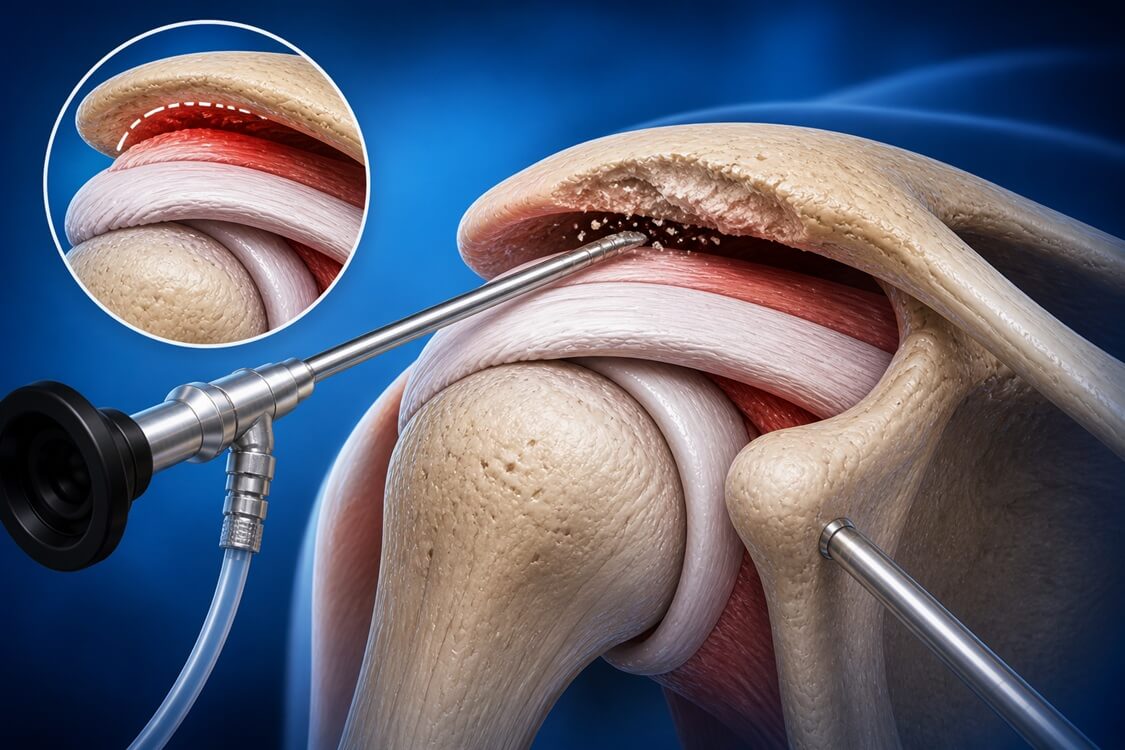
It is a minimally invasive keyhole surgery performed using a small camera (arthroscope) through tiny incisions.

What is done during surgery:

  • Inflamed bursa is removed (bursectomy)
  • Bone spurs or a curved acromion are reshaped (acromioplasty)
  • More space is created for tendons to move freely
  • Associated problems (biceps inflammation, partial cuff tears) are treated simultaneously

The goal is to eliminate pinching, reduce pain, and restore smooth shoulder movement.

Benefits of Arthroscopic Subacromial Decompression

  • Small incisions and minimal scarring
  • Less post-operative pain
  • Faster recovery compared to open surgery
  • Better visualisation of shoulder structures
  • Early return to daily activities

Most patients experience significant pain relief and improved shoulder function.

Who Benefits Most from This Surgery?

Arthroscopic subacromial decompression is ideal for patients with:

  • Persistent shoulder impingement symptoms
  • Subacromial bursitis not responding to treatment
  • Bone spurs causing tendon irritation
  • Partial rotator cuff tears with impingement
  • Painful overhead activity affecting daily life or sports

Recovery After Surgery

  • Sling for comfort for a short duration
  • Early shoulder movements encouraged
  • Gradual strengthening exercises
  • Physiotherapy tailored to your lifestyle and activity level

Typical recovery timeline:

  • Daily activities: 2–3 weeks
  • Comfortable overhead movement: 6–8 weeks
  • Sports/heavy work: 3–4 months

Why Choose ArthroSportz Med for Arthroscopic Subacromial Decompression in Chennai?

Our Treatment Philosophy

At ArthroSportz Med, arthroscopic subacromial decompression is not done routinely for every shoulder pain.

We recommend it only when:

  • Conservative treatment has failed
  • Impingement is clearly identified
  • Surgery will meaningfully improve function and comfort

Our goal is simple: remove the cause of pain, preserve the shoulder, and help you return confidently to daily life and sports.

That precision-driven, patient-first approach defines ArthroSportz Med.

Expertise in arthroscopic shoulder surgery

Evidence-based selection of patients (surgery only when truly needed)

Advanced arthroscopic equipment and techniques

Ability to treat associated shoulder problems in the same sitting

Focus on pain relief and long-term shoulder health

Personalised rehabilitation and return-to-activity plans

Restoring strength and mobility with trusted hands for over 12 years.

12+ Years of Care

Specialising in shoulder & knee care, arthroscopy, sports injuries, and trauma.

Joint & Sports Care

Frequently Asked Question

In most cases, you can begin physiotherapy without a doctor's referral; however, some insurance providers may require one for reimbursement or coverage purposes.

In most cases, you can begin physiotherapy without a doctor's referral; however, some insurance providers may require one for reimbursement or coverage purposes.

In most cases, you can begin physiotherapy without a doctor's referral; however, some insurance providers may require one for reimbursement or coverage purposes.

In most cases, you can begin physiotherapy without a doctor's referral; however, some insurance providers may require one for reimbursement or coverage purposes.

Source/s: Banner Image – AI Generated & is for representational purpose only.